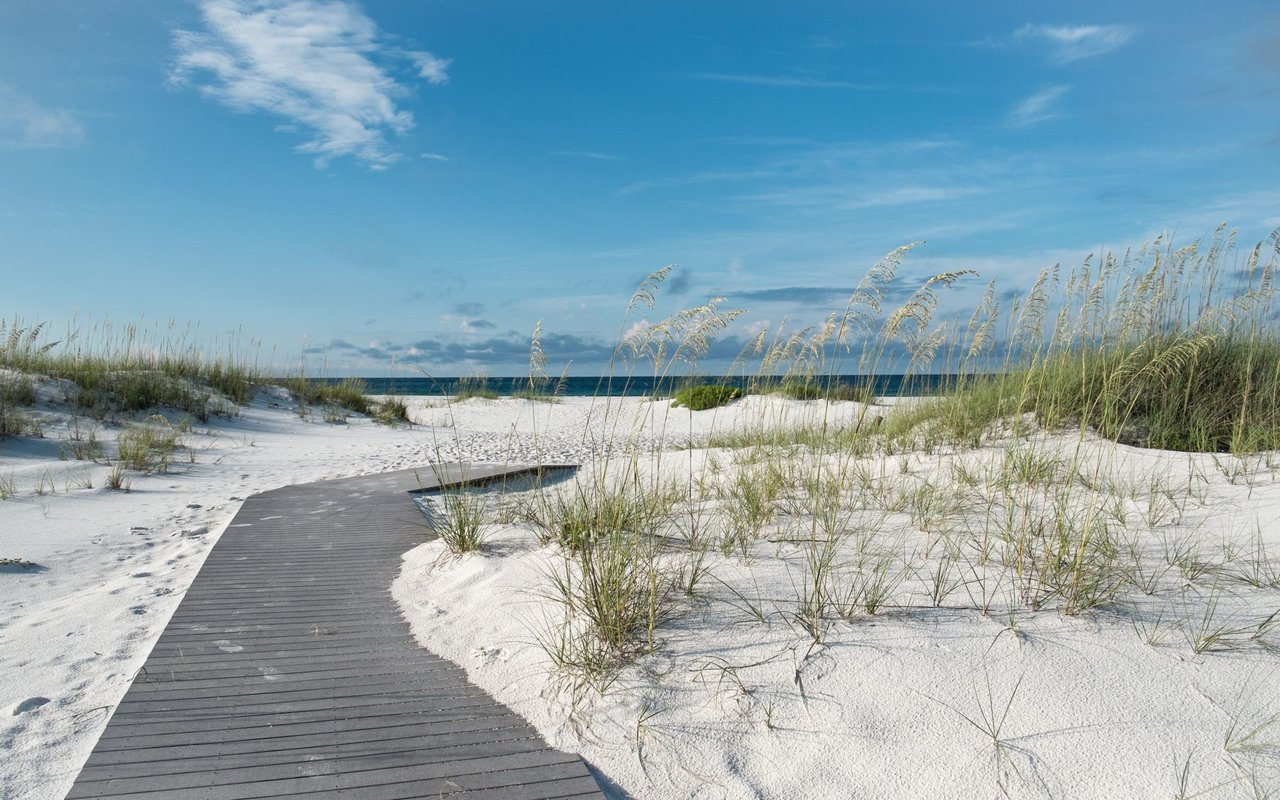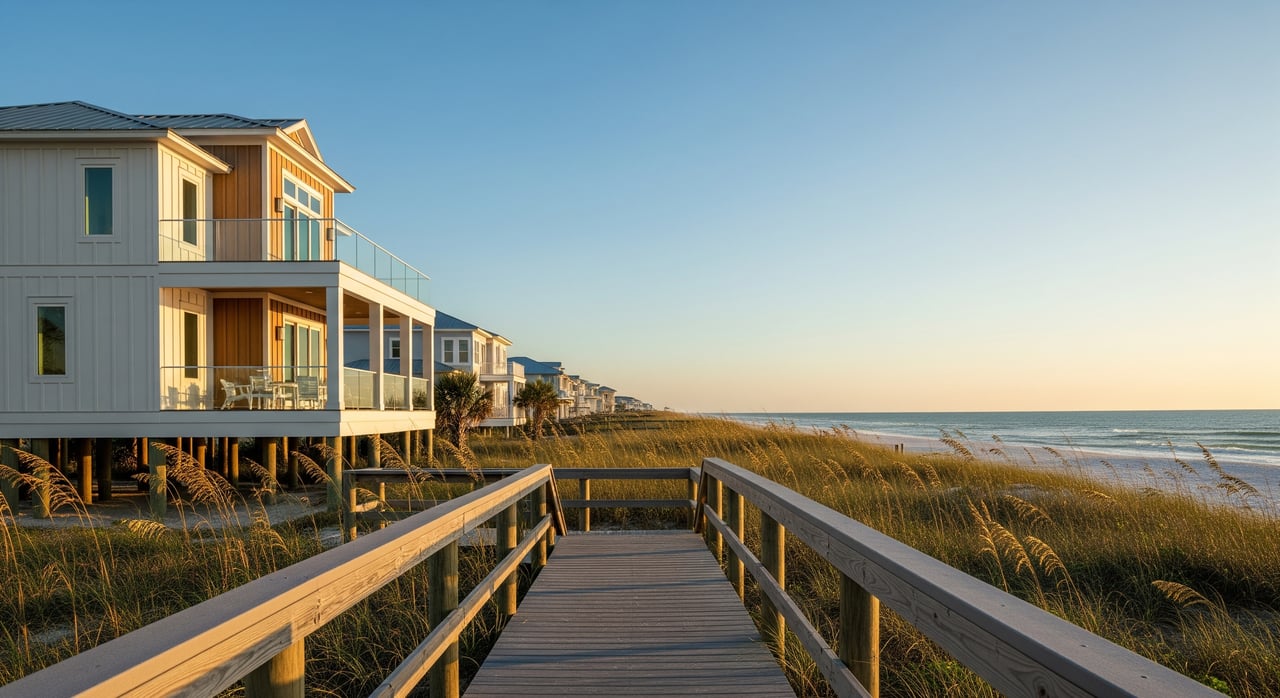
Thinking about building or buying new on Cape San Blas? The coast is stunning, but coastal construction comes with unique rules, timelines, and decisions you want to get right. You might be weighing a quick move into a spec home against designing a custom build, or trying to decode ARC approvals, flood rules, and warranties. This guide walks you through the essentials so you can move forward with clarity and confidence. Let’s dive in.
Spec vs. custom on Cape San Blas
What each option means
- Spec home: A builder starts or completes a home before a buyer signs on. You choose from available plans and finishes, often with limited customization.
- Custom home: You and a builder or architect design to your preferences. You control layout, materials, and how the home fits the lot.
Pros and cons for the Cape
- Spec pros: Faster move-in, fewer decisions, and simpler financing once complete. Good if you want a turnkey second home.
- Spec cons: Limited personalization and sometimes less optimization for site specifics like sun, wind, and dune setbacks.
- Custom pros: You can prioritize coastal resilience, such as higher finished floor elevation, impact-rated windows, and storm shutters. You can plan elevated living areas and design around dune protection.
- Custom cons: Longer timeline, more choices, more chances for change orders, and construction financing is common.
Timelines you can expect
- Spec: If the home is complete or close, you could move in within a few weeks to a few months.
- Custom: Plan for 6 to 18 months or longer. ARC reviews, coastal permits, and site conditions can extend your schedule.
How financing differs
- Spec: Often closes like a traditional home purchase once complete, using conventional, FHA, or VA loans.
- Custom: Usually uses a construction loan or a construction-to-permanent loan. You pay interest-only during the build. Builder draws are tied to inspections.
Map out permits, ARC, and approvals
Many Cape San Blas neighborhoods have HOAs and Architectural Review Committees (ARCs). They review aesthetics and community standards while the county enforces building codes and safety.
Your likely approval sequence
- Confirm HOA/ARC: Check if your lot sits in an HOA. Get the recorded plat and CC&Rs from the Gulf County Clerk of Court.
- Pre-application meeting: Meet with the ARC and your builder to flag prohibited elements and align on expectations.
- Submit ARC package: Include your site plan, elevations, color and material samples, roof type, fence and landscape plans, and a current survey.
- ARC review: Timelines vary, but 30 days after a complete submission is common. Verify your community’s written timeline.
- County permitting: After or alongside ARC approval, apply through the Gulf County Building and Permitting Office with engineered plans meeting the Florida Building Code.
- Special coastal permits: If work affects dunes, vegetation, or areas seaward of mean high water, you may need state or federal permits before the county issues permits.
- Inspections: Expect county inspections at key stages. Schedule your own independent inspections too.
Common ARC topics on the Cape
- Minimum finished floor elevation and foundation type
- Building height and setbacks
- Exterior lighting standards for sea turtle protection
- Roof color and material
- Impact-rated windows and doors
- Landscaping and dune protection
- Screening for mechanical equipment
Contract tip for ARC responsibility
Make it clear in the purchase or build contract who handles ARC submissions, resubmissions, fees, and any redesign costs. Require written approvals before construction starts.
Build for the coast: site and resilience
Cape San Blas is a barrier peninsula with exposure to storm surge, wind, and shifting sands. Many properties sit in special flood hazard areas. You should plan for elevated construction, flood insurance, and materials that perform in harsh coastal conditions.
Utility and foundation realities
- Foundations: Pile foundations are common due to coastal soils and high groundwater. A structural engineer’s input is valuable at the pile stage.
- Flood zones: Follow FEMA flood maps and elevation requirements. An elevation certificate after construction helps with flood insurance.
- Septic and water: Some areas use septic systems and private wells or limited municipal services. Verify sewer availability and septic permits with local health authorities.
Coastal timing and lighting rules
- Sea turtle nesting: Generally May through October. Some exterior work and lighting are restricted during this period.
- Lighting: Expect requirements for shielded, low-glare exterior lighting visible from the beach.
Builder contracts and warranties
A clear contract and a strong warranty protect your investment. Take time to read every clause before you sign.
The 1-2-10 warranty pattern
- 1-year workmanship and materials
- 2-year systems such as plumbing, electrical, HVAC
- 10-year major structural components
Coverage varies by builder, so read the actual warranty language, exclusions, and procedures.
What to review in your contract
- Price structure: Fixed price offers cost certainty. Cost-plus can create surprises if not tightly managed.
- Specifications: Require detailed specs and allowances for finishes, appliances, and fixtures.
- Change orders: Put cost and schedule limits in writing, with your approval required.
- Timeline: Include realistic completion dates and remedies for unreasonable delays if timing matters to you.
- Payments and liens: Set retainage or holdbacks and require final lien waivers from subcontractors.
Licensing, insurance, and disputes
- Licensing: Verify your builder and key subcontractors hold active Florida licenses.
- Insurance: Ask for proof of general liability and workers’ compensation.
- Disputes: Understand dispute resolution terms, including mediation or arbitration. Know how to file a complaint with the state if needed.
Inspections and milestones
County inspections confirm code compliance. Independent inspectors and engineers provide added quality control, especially for coastal foundations and building envelopes.
Recommended inspection milestones
- Pre-construction and site check: Verify lot lines, setbacks, drainage, and utilities. Review soils and any septic requirements.
- Foundation and piles: Confirm embedment, bracing, connections, and anchorage to resist wind and uplift. Have a structural engineer review if possible.
- Rough-in and framing: Inspect plumbing, electrical, HVAC, hurricane straps, sheathing, flashing, and envelope details.
- Pre-drywall: Catch hidden defects before walls close. This is one of the most valuable independent checks.
- Insulation and air sealing: Confirm R-values, installation quality, and moisture controls fit coastal needs.
- Final and Certificate of Occupancy: Confirm life safety, mechanical systems, and grading. Complete a thorough punch list.
- 11th to 12th-month warranty walk: Document issues for warranty claims before the 1-year period ends.
Special coastal checks
- Elevation certificate after construction
- Flood vents, breakaway walls, and water-resistant materials below base flood elevation
- Impact-rated glass and storm shutters with proper installation
What to collect at each stage
- County and independent inspection reports
- Engineer letters for structural elements
- Product installation certificates for impact products and hurricane connectors
- Owner manuals and warranties for mechanical systems
- Elevation certificate and final Certificate of Occupancy
Insurance and risk planning
Get insurance conversations started early. Coastal homes often require both homeowners insurance and flood insurance. Your flood premium will be influenced by your elevation certificate and flood zone. During construction, confirm who carries builder’s risk coverage and at what stages responsibility shifts.
Quick buyer checklists
Documents to gather early
- Recorded covenants and ARC guidelines
- Builder license number, proof of insurance, and references
- Detailed contract with plans, specs, allowances, schedule, and warranty text
- Site survey, soils report if available, and FEMA flood zone information with proposed finished floor elevation
- Utility availability and septic permit information if needed
- HOA fee schedules and any pending assessments
Questions to ask your builder
- Who handles ARC submissions and any resubmissions?
- What is your standard warranty and when does coverage start?
- What is the construction timeline and draw schedule?
- Who is the day-to-day project manager and change order contact?
- Are plans engineered for wind loads, and are impact windows used?
- Can you share recent local examples and references?
- Will you provide an elevation certificate and as-built survey at completion?
Cost control and timelines
- Use written change orders with pricing and schedule effects before work begins.
- Set realistic allowances with a contingency for selections.
- Expect longer lead times for impact-rated windows, doors, and specialty coastal materials.
- Add buffer time for ARC reviews and coastal permitting.
How The Joe Real Estate helps
You deserve a smooth, informed experience when building or buying new in 32456. With buyer advocacy, neighborhood-level insight, and modern tools, our boutique team helps you compare spec and custom options, understand ARC requirements, and plan a realistic timeline. We coordinate tours, share up-to-the-minute local context, and keep communication clear so you can make confident decisions on Cape San Blas.
Ready to take the next step on the Cape? Reach out to The Joe Real Estate for local guidance tailored to your goals.
FAQs
How long does it take to build a new home on Cape San Blas?
- Spec homes can be ready in weeks to a few months if already underway, while custom builds typically take 6 to 18 months or more depending on ARC reviews, permits, and site conditions.
Do I need flood insurance for a new build in 32456?
- In many cases yes, especially in special flood hazard areas; check FEMA maps, plan for elevated construction, and get quotes early since your elevation certificate will influence premiums.
What new-home warranty is typical in Florida?
- Many builders use a 1-2-10 structure that covers workmanship for 1 year, major systems for 2 years, and structural components for 10 years, but always review the specific warranty document.
Should I hire an independent inspector for new construction on the Cape?
- Yes, independent inspections add quality control beyond county code checks, especially at the pile foundation stage and pre-drywall.
Who handles HOA or ARC approvals for a new build in a Cape San Blas neighborhood?
- It depends on your contract; clarify whether you or the builder will prepare and submit the ARC package, pay fees, and manage any resubmissions.
Are there rules about beachside lighting and dune work on Cape San Blas?
- Yes, lighting near the beach is restricted during sea turtle nesting season and work that affects dunes or vegetation may require state or federal permits, so plan your design and timeline accordingly.
Ready to explore lots or new construction on Cape San Blas? Connect with The Joe Real Estate to get started.